Advocacy, psoriasis

Not Going to DC After All, But . . .

I will still join the National Psoriasis Foundation‘s Capitol Hill visits remotely! It will be an early call, but I’m glad I can still participate even though I won’t be there in person. A couple years ago I visited the local office of my congressman. I definitely look forward to chatting with John Garamendi’s staff in Washington D.C. too.

The winter storm #Stella unfortunately canceled my flight from Phoenix to Washington DC’s Reagan airport. I found out when I woke up for my first flight out of Sacramento. Sadly, although I knew cancellation was a possibility, it became a reality as I saw the alert in the wee hours of the morning. I’m still in some kind of denial, as I still haven’t unpacked my bags.

I do welcome the rest, though. Last week’s trip to Orlando for the American Academy of Dermatology annual meeting, and a week full of work at church tired me out. Yesterday I spoke in two consecutive church services on short sleep after Daylight Savings Time. My wife rejoiced when she found out I would stay home, worried that I might fly into a blizzard, and knowing how busy I’ve been recently.

This afternoon I finally got around to working on a couple chores I’d put off for weeks: washing the cars, and mowing the lawns. Now I’m spending time catching up on emails and blogging. I spent some much needed time with the kids, too, with my son helping me with the work.

Even though I’m not going to DC, I hope to go next time. And I get to enjoy the 80 degree weather here in Sacramento. It’s disappointing, but not all bad.

Standard
Advocacy, psoriasis

The Future of Psoriasis Care

If you could look forward to coming medical innovations in psoriasis treatment and care, what would you want to see?

In my Everyday Health column The Itch to Beat Psoriasis,  I address questions medical innovation, cure and prevention, and what a life free of psoriasis might look like. As always, I’m grateful to Janssen for the invitation, supporting my travel expenses, and putting together a great team for the patient panel.

In the column I did not share how going to San Diego that weekend became quite a journey. The storms in California raged during my travel both ways. Matt Iseman showed up a bit late to our prep meeting, which amped up my anxiety as I hoped we’d have more time to talk about how the panel would be conducted.

The overwhelming consensus from the panel is the need for immediate relief so those living with autoimmune conditions. The impact of chronic conditions cannot be overstated. It’s written on the lives of those who battle everyday.

FullSizeRender.jpg-3

I joined Matt Iseman, Brooke Abbott, and Mariah Leach for an immunology patient panel in January

Turns out everything went better than I could have expected. The researches gave us a warm round of applause at the end. Afterwards, I met a couple people who wanted to follow up with what we talked about. The huge storm that hit home even passed just before I landed at Sacramento airport!

All in all a great trip to share the patient story to those who everyday work hard to improve our lives.

——————

You can read the column The Future of Psoriasis Care here.

Standard
Advocacy, psoriasis

Finishing Up at the American Academy of Dermatology 2017 Meeting

After taking a day to familiarize myself with the AAD meeting, I went full force for the next day and a half. I’m not sure how often patient advocates join meetings like AAD, but it definitely was a first for me. Without my guides and support from Janssen I don’t think I would have had such a positive experience.

Here are some of the elements of the meeting I experienced:

Exhibit Hall

fullsizerender-jpg-10

AAD 2017 Exhibit Hall in Orlando with over 400 booths

I took the picture above at the Aveeno booth, which shows me lost in an oat field. I don’t endorse products, but don’t mind sharing that I’ve personally used Aveeno since I was a teenager. I couldn’t pass up the photo opportunity!

The exhibit hall had over 400 booths with companies and organizations showing off their latest products, medications, and services. I naturally gravitated toward the consumer products and medications I use. But I also marveled at all the new medications available for psoriasis and atopic dermatitis. So much is coming down the pipeline, stay tuned.

Scientific Posters and Presentations

fullsizerender-jpg-8

Scientific Posters read on computers and presented in five minute sessionsfullsizerender-jpg-9

In another section of the exhibit hall doctors/researchers presented their scientific posters. I suppose these once were literal posters on a board, but now they are on slides available on computer monitors. I attended about six or seven of these sessions and found out some critical information for my future treatment options.

I liked how these sessions focused on a particular question, had clear conclusions, and did not go on for too long. The psoriasis sessions this morning garnered quite a bit of interest, as did all the psoriasis sessions I attended. Much of it flew over my head, but as a patient I still wanted to know the latest and greatest. It’s patients who can translate the information to other patients–even if we need them translated for us first.

Plenary Session

fullsizerender-jpg-7

The plenary session with Dr. Joel M. Gelfand presenting research on psoriasis and cardiovascular disease

I earmarked the the plenary session as one talk focused on the comorbidities associated with psoriasis. But first I heard the incoming AAD President’s address and another talk on melanoma. The anticipation grew as the psoriasis talk came.

Dr. Gelfand’s work includes research on the role of psoriasis in conditions found in patients. As many patients know, a myriad of conditions, such as diabetes and cardiovascular disease, are associated with psoriasis. We’ve known that those with moderate to severe psoriasis’s life spans shorten some five years. But does psoriasis cause those conditions?

The takeaway for the dermatologist is to check for psoriatic arthritis, educate and screen patients for cardiovascular risks, check for cancer, and give vaccinations like the flu shot. As patients we too should be asking for the same even if the doctor doesn’t order them for us.

Scientific Sessions

Finally, I sat in over four hours of lectures from top dermatologists on various topics related to psoriasis. The symposia had a number of doctors presenting for about 15-20 minutes each. The forum had two speakers who each took half the time.

I don’t have a picture of the scientific sessions as the AAD did not permit photography. Once I saw others take pictures, though, I felt tempted to take some. Even if I did, I wouldn’t show them publicly here. That’s if I did . . .


I have many more thoughts about the AAD meeting to sort out and blog about. Look for those in entries to come. In the meant time I’m looking forward to getting home tonight to celebrate my daughter’s 16th birthday.

Finally, I’m extremely grateful that Janssen gave me the opportunity to attend the meeting, and for their awesome support. They started a new psoriasis blogger group called “I Know PsO,” and invited me as a member of that group.

Standard
psoriasis

How to Take Charge of Your Psoriasis Treatment

[This blog was originally published on The Itch to Beat Psoriasis.]

I recently spoke with Dave Taylor, director of research at Inspire, a patient engagement company with about 220 disease condition sites. If a picture is worth a thousand words, then Inspire’s communities paint thousands of pictures of people living with a myriad of health conditions, including psoriasis.

The TalkPsoriasis community, in partnership with the National Psoriasis Foundation (NPF), now has over 100,000 members, and is the largest that Inspire hosts.

“These are people who took that first step and turned to the Internet,” Taylor says. “We have a billion words” from members who engage others about their health conditions on the site.

Patient Insights

Last year, I wrote about Inspire’s first annual survey titled “Insights from Engaged Patients.” I excitedly opened this year’s survey to find out what, if anything, changed.

Originally, I wrote about how to become a more engaged patient: advocate for yourself, break down barriers to care, and use electronic resources.

These three still stand out for me after reading the latest report. As an engaged patient, you need to advocate for yourself and break down barriers more than ever before. For example, engaged patients experienced cost issues 65 percent of the time with treatments, 52 percent with other medications related to treatment, and 40 percent from out-of-pocket costs related to travel and logistics.

Cost barriers continue to hit me in the wallet each time a family member picks up medication at the pharmacy or sees the doctor. The co-pays go up each year, while the benefits stay the same or decrease. It’s challenging to stay on top of your own healthcare — to overcome the countless hurdles like costs, insurance, and access. But that’s what engaged patients who live with serious health conditions need to do more than ever.

As for using electronic resources, this year’s survey showed that patients increasingly engage with their healthcare on mobile devices. As Taylor notes, “the number of people who used their smartphone to look for information about their health conditions went from 28 percent to 50 percent this year.”

While I am never far from my smartphone, I don’t use it as much for healthcare as I do for email and messages, checking the weather, or sports scores. In my experience, mobile delivery of health information has come a long way, but still needs improvement.

Taking Medications as Directed

As an autoimmune patient, I scanned the report to see if any data stood out for my group. I learned that “autoimmune and neurologic patients are more likely to have gone without medications (60 percent of patients of each type).” As Taylor says, “You are dealing with chronic, ongoing treatment. The fact that you have to take a medication indefinitely opens the door to adherence and compliance issues.”

Taylor also notes that people with more acute conditions might prioritize those over chronic conditions. I couldn’t agree more. Keeping up with medications is a concern that I’m focused on this year. The report cites side effects (53 percent), cost (53 percent), insurance coverage issues (40 percent), lack of effectiveness (33 percent), and dosing issues (8 percent) as reasons that patients stop taking prescription medications.

These issues are difficult to overcome and need to be addressed in proactive ways. Of course, talking to your doctor about adjusting medication is key. But I get embarrassed to tell him if I’m not following his directions, and I might not want to try the alternative.

Brand Name or Generic Equivalent?

A final observation from the report speaks to brand name and generic equivalent medications: “Oncology patients and autoimmune patients are more likely to not know if their medication has been switched to generic equivalent.”

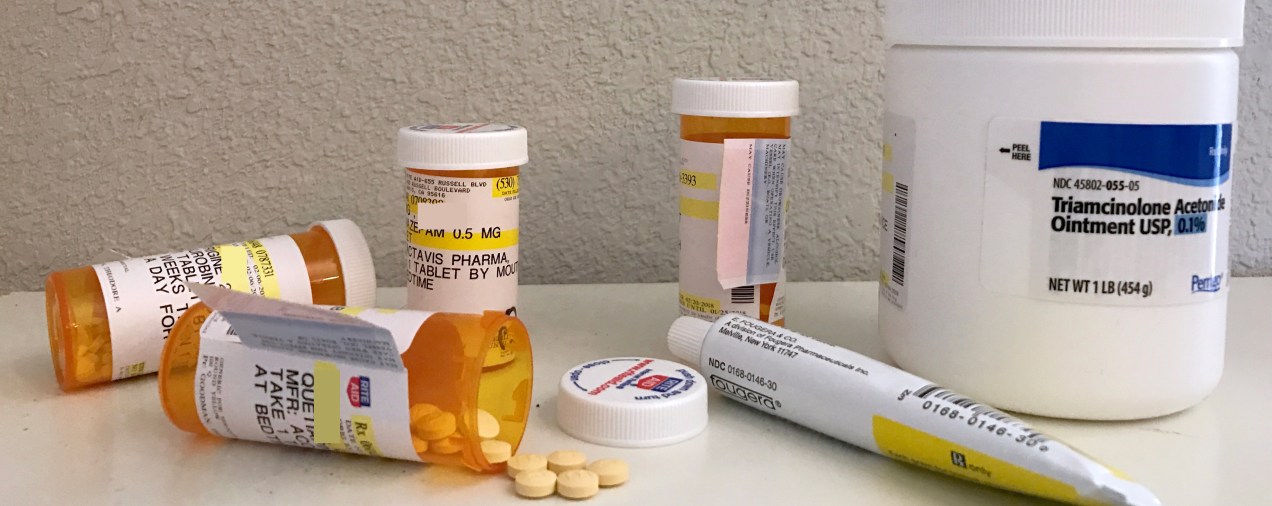
Often taking a generic equivalent is not an issue. But studies show that the brand name sometimes does make a difference. That’s the case with one of my medications. My dermatologist often forgets to note “brand name only” on the prescription. I refuse the generic, and have the pharmacy call my doctor to approve the brand name.

Do you know if your medications need to be brand name, or if they are switched to generic when you go to the pharmacy? The engaged patient needs to ask that question, at the doctor’s office  and the pharmacy.

The report contains much more information about the engaged patient than I could highlight here. You can view all the survey results here.

Standard