psoriasis

Traveling with Psoriasis

[The view from The Getty Center in Los Angeles, June 2017]

I originally wrote this article for The Itch to Beat Psoriasis on Everyday Health. The editor needed to cut it down by almost half. My enthusiasm for travel apparently could not be contained in under 1000 words. So, I have the full, original article here.

————————————-

Last summer my family and I took a weeklong vacation to South Dakota to see the Badlands and Mount Rushmore. Besides waking the family up for the early morning flight, everything went according to plan. We went to lunch in downtown Rapid City, SD to pass the time before checking into the hotel. Then it dawned on me—I forgot my injectable biologic to treat my psoriasis in my backpack in the trunk of the rental car.

I immediately panicked, knowing that it would keep in room temperatures for a couple weeks, but not in a heated car in summer. We ran back to the car, and pulled out my backpack in a desperate attempt to save my medication. Sadly, it was too late—it felt as hot as the air in the car. After a quick call to the medication’s manufacturer I learned I couldn’t use it any longer.
badlands sign fam

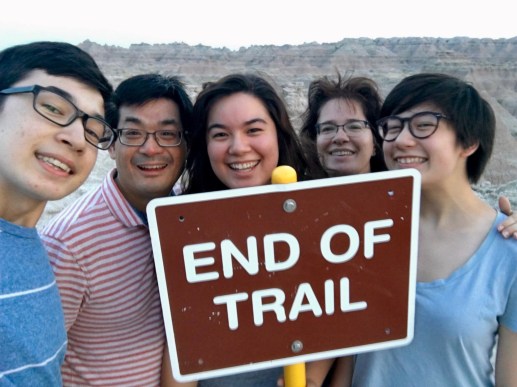
Last summer’s trip to South Dakota at the Badlands National Park. Unfortunately, I fried my biologic on the first day of this trip, but my skin mostly stayed under control.

In the end that incident didn’t ruin my trip or affect my skin adversely. I took it as a learning experience to not give up on travel, but to continue to refine how I travel. Even after making mistakes like at last summer’s vacation, I still look forward to traveling. Psoriasis need not take those opportunities away from me to see the world.

I do recognize, however, that traveling with a chronic condition like psoriasis takes special preparation and planning. The key principle I apply when traveling is to think about what I do at home for my psoriasis. Then, I take as much of what I do in my daily routine with me on the trip. What works at home often works on the road with some modification.

Scouring online I found some great articles on the topic of traveling with psoriasis in general, including 7 Tips for Traveling with Psoriasis here on Everyday Health. I keep those in mind as I share the process of what I do when traveling.

Preparing for an Upcoming Trip

A successful trip begins with preparation and packing. My before-the-trip routine begin with arranged travel plans so I know where I will be and when, including how I will get there. Once I know the destination and arrangements, I go through a checklist in my mind to make sure I have everything I need for the duration of the trip.

Prioritize Prescription Medications

I put top priority on packing enough of my prescription medication. I often can purchase over the counter items, or even clothes when I’m out of town, but it’s harder to replace my prescriptions. I do carry the number to call if I need medical care outside of my home area. But even if I can replace them, I don’t want to take the time out to do so if I don’t have to.

The last time I traveled to Chicago for a conference I prepared as usual. But the morning of the trip I forgot one of my prescription topical medications on the bathroom counter. Providentially, I keep travel size tubes of the same medication in my backpack. That tube contained just enough medication for the trip.

Redundancy in packing medications is one way I prioritize them when I travel with psoriasis. That in turn means I need to have enough on hand to pack for the trip. Going over my travel plans with my doctor before the trip, ordering prescription refills, and calling my insurance provider to find out what to do if I lose my prescription medication ensures I have what I need as I leave my home base.

Review Daily Routines

When I’m packing, I go over my daily routines from morning to night. In the morning, I use a topical medication, take a pill, and apply moisturizers. Those items go on a packing list. I do the same for the afternoon, evening, showering, and bedtime routines. By going over the daily routine I make sure have what I’ll need for each day.

Store Travel Ready Items

Over many trips, I’ve collected travel size containers, samples, and items that I set aside in a medication tub. Only the items on my list make it in the tub. Before each trip, I replenish medications and toiletries I need for the length of the trip. That tub minimizes the potential for forgetting an essential item, and easily packs in my suitcase.

Pack Everything Needed

I used to worry about over packing. Once I traveled with a friend to Europe to speak at a conference. I packed a large duffle bag with all my medications, moisturizers, and sets of clothes. My friend didn’t need to pack as much. He criticized how much I packed, primarily concerned that those driving us mainly have small cars. I explained to him that I need it to take care of my skin.

I don’t bring huge suitcases for an overnight trip, but at the same time I don’t worry about what others think, or make myself travel with a small bag. If it’s a longer trip, I pack larger moisturizer containers and whatever else I need to feel comfortable. I pack what I need, even if it costs more in luggage fees.

dad abe lincoln

On the Magnificent Mile in Chicago I found a very tall Abraham Lincoln to take a picture with.

During a Trip

When the trip starts, I need to keep focused on my health maintenance. It’s easy to get caught up in the conference I’m attending, or the national park I’m visiting. But taking the time to manage my health is just as important during travel.

Minimize Vacation/Travel Stress

My family growing up stuck to early starts and long days on vacations. We packed in all we could do each day, wanting to maximize the time and opportunities on the trip. I found vacations more stressful than staying home.

I know stress is a part of travel, but I try to minimize the stress as much as possible as it’s also a trigger for my psoriasis. When I plan a vacation, I schedule rest and late starts whenever possible. Packing early and getting to the airport in plenty of time also minimizes anxiety. I practice mindfulness, prayer, and deep breathing whenever I need to calm down.

Keeping those home routines helps me with stress management as well. On my last trip, I committed to exercise in the hotel gym. Two of the four nights I ran on the treadmill. Instead of staying out longer with new friends, I kept to my regular bedtime. Breaks during the day helped me stay focused and healthy.

Communicate Special Accommodations

A key to a successful trip for me is letting people know my needs and accommodations. If I’m staying at a hotel, I call ahead to ask if they use any cleaning products or fragrances that might irritate me. I also ask about hypoallergenic options for bedding.

From time to time I stay with friends or hosts. I struggled in the past to tell them I need hypoallergenic laundry detergent on bed sheets, or explain that I need a separate bathroom with around 45 minutes to get ready. I’ve found most people understand once I explain my situation.

Moisturize Skin on the Go

I used to wonder why my skin seemed to feel worse on flights. I soon realized that the dry air in the cabin dried out and irritated my skin. I now take a small container of moisturizer with me to use periodically on travel days. I also hydrate as much as possible on planes.

Moisturizing becomes especially important in hot, dry climates. When I visit my parents in Southern California, sometimes the dry Santa Ana winds create low relative humidity. Checking weather reports provides important information for how much skin moisturizing might be needed.

Look Out for Psoriasis Triggers

The National Psoriasis Foundation (NPF), in the article “Causes and Triggers,” states that “Psoriasis triggers are not universal. What may cause one person’s psoriasis to become active, may not affect another.” It’s important, then, to know your psoriasis triggers and try to avoid them—especially while traveling.

Some universal triggers the NPF mentions include stress, injury to skin, and infection. To prevent these and other triggers I apply sunscreen in sunny environments, wash my hands to prevent infections, and protect my skin from damage such as bug bites, or getting scratched.

Mentally Prepare for Onlookers

Summertime is a peak travel time. While I love going to the beach, or taking the kids to an amusement park, I don’t like exposing psoriatic skin in those situations. One spring my daughter and I took a cruise to the Panama Canal with my parents as a relief from the stress of ineffective psoriasis treatments. I needed the break away and the warm climate during the winter, but I was over ninety percent covered in lesions. It took some courage, but I went out on the deck anyhow to relax and catch some sunlight.

Over the years, I’ve learned to ignore people who stare, or ready what I’ll say if they ask about my skin. Explaining it’s not contagious, and it’s an autoimmune condition, helps me feel empowered, and educates others in the process.

dad psoriasis walk sf

My daughters and I drove into San Francisco to take in the National Psoriasis Foundation Walk and do some shopping. One of my favorite cities in the world, and near where I grew up.

After the Trip Ends

When a trip ends, I tend to experience mixed feelings. I’m glad to be home where I can sleep in my own bed and resume my normal routines. At the same time, I miss the adventure of traveling. I might also need follow-up care for my skin.

The last time I went to a five-day conference my skin did not do well at all. Despite my best intentions and planning, something triggered a flare. The time and effort to calm the flare was an unfortunate consequence of travel, but one I know might occur. Checking in with my doctor, taking inventory of skin care supplies, and allowing for a low-key reentry into daily life also become part of my routine after a trip.

The trip to South Dakota fulfilled part of a bucket list item to visit the all national parks in the United States. I’ve traveled to Africa, Asia, Europe, Central America, and various parts of the country. So much of the world lies unseen and unvisited for me. Traveling gives me opportunities to meet new people, see old friends, appreciate natural beauty, and experience different cultures.

The memories I make on those trips make the extra effort to care for my psoriasis on them all worth it.

dad-endeavor.jpeg

On the Los Angeles trip we also visited the California Science Center where the Space Shuttle Endeavour resides. The family voted this part of the trip as one of the best moments of the week.


For some great specific tips on international travel, see International Travel with Psoriasis.

Standard
psoriasis, Psoriasis Treatments

So What If My Skin Clears?

This morning I gulped down the first Otezla pill of the third week of treatment. Given the intense side effects from pill one, I consider two weeks and 27 pills a milestone. We’ll celebrate with steaks on the grill for Memorial Day barbeque in a few hours.

First, though, I’ve begun to contemplate an interesting question: what if my skin is clear, but I’m still experiencing all these side effects? Would I still take it?

Adverse Effects versus Effectiveness

I assumed all along that Otezla’s side effects would decrease over time. Others testify to the lessening of diarrhea and headache around week 2 or soon after. Last week, while still challenging, overall I felt better. The headache, wheezing, and stomach upset hit within one hour after taking the pill. But after about five or six hours I feel a bit better rather than those horrible effects lasting the whole twelve hours.

I felt better enough to be more productive at work this week, although at a slower pace with more breaks. Yesterday, I spoke for fifty minutes at church, led a two-hour counseling session for a couple, and attended another couple meetings. I felt a great sense of relief just to make it to the end of the day.

Despite  this progress, if the side effects plateau at the current level and I can’t mitigate the effects some other way, even if my skin shows marked improvement, I’ll probably stop taking the medication.

Out of Sight, Out of Mind

I’ve taken a medication, cyclosporine, off-and-mostly-on for a number of years now. I don’t feel any side effects from my moderate dose. But my blood work tells me at a higher dose my creatinine levels increase, indicating potential damage to my kidneys and kidney function. Also, my blood pressure goes sky high. Since I can’t feel these effects, they are out of sight and mostly out of mind.

Cyclosporine is hands down the most effective medication I’ve taken for my psoriasis. It’s also one of the most toxic. I’m much more willing to take it, though, since I place a high value on my ability to function and be productive–not just live.

Right now with Otezla I can function at about sixty-percent, but otherwise I’m a blob resting on the couch. I still get out to run or walk, but I often feel horrible while working out. If I can’t exercise or eat, then isn’t that negatively impacting my health too?

Either/Or–Forget It

I just might find myself at this crossroads very soon, needing to choose to stay with Otezla while feeling not so great, or to embark on another new medication journey. Cyclosporine is off the table for a while so my kidneys can take a break. Other options could present themselves too.

This either/or option doesn’t fit my preference profile at all. I want to stop feeling adverse side effects, have assurance of little hidden impact on my internal organs, and have it be the most effective treatment possible. I suppose if I found that medication I wouldn’t need to keep searching for a new medication!

So, for at least today, I’m going to stop thinking about it.  Forget it. It’s not a choice before me quite yet. It’s a holiday, and the family will be together with kids home from school. Besides, my head started hurting half way into writing this blog from my first third week dose.

Standard
psoriasis, Psoriasis Treatments

Why I Hate Taking a New Medication

A little over a week ago I received the news that I would receive a somewhat new psoriasis medication, apremilast (Otezla), direct from the manufacturer. At first I felt a sense of relief that the battles with insurance over covering it came to an end. Then I faced the prospect of taking the medication. A feeling of dread overcame me.

I say I’ve tried every psoriasis medication there is to try. Of course, that’s not completely true, especially with some obscure ones left untried, and more coming out all the time. Over the past few years I’d given up on trying the new ones since my current treatment worked fine.

But it’s time to take a break from cyclosporine, which has a long list of side effects and an FDA limit of one year of usage at a time. That means a new medication.

New Medicine, Same Old Story

I have the memory of an elephant when it comes to how well I felt and did on various medications. Methotrexate makes me want to vomit (still). Adalimumab (Humira) gave me horrible eczema rashes (though cleared psoriasis). Soriatane made my palms and soles of my feet peel so painfully I bound them to survive. Narrowband UVB (phototherapy) burned my skin to where I couldn’t put on clothes without feeling pain.

Apremilast is on the list of haven’t tried, might want to because it’s for psoriasis after all, but I’ve heard and read the stories of the side effects. The pharmacist who counseled me over the phone also described patients she knows with GI issues (diarrhea, vomiting, nausea), headache, insomnia, weight loss (yes!), and depression (no!). The list is not comprehensive, but certainly some of the side effects a patient on this new medication might experience.

Every new medication I’ve tried has the list of warnings, side effects, and potential drug interactions and concerns. Do I want to take that medicine? Not on your life. But I pop that pill hoping that I might be the exception—works super well for me without side effects.

I can dream, anyhow. I can be the one to prove my doctor wrong, who reluctantly prescribed it to me, adding, “It’s a horrible medication.”

Every new medicine I’ve taken I’ve had that same thought, but so far it’s the same old story. I’m human, other humans who took this drug felt X and Y, and I’m feeling X and Y times two.

Stopping this Medication. . . Just Kidding

Today I had enough. Enough of feeling horrible with headaches, bloating, wheezing, and inability to focus. Enough is enough. I’m going to stop taking it, at least the morning dose so I can be a productive person again.

Then my dermatologist messaged me to try it for two months. I hadn’t told him I would take a break this morning—how did he know? He went on to say that the noted side effects improve over time for many people.

As ten o’clock rolled around, I stared at the pills thinking, maybe, just maybe, the side effects will get better if I keep going. Don’t give up so early, I told myself. I can fight through the pain, I coached myself. With a sense of reckless abandon, I grabbed my morning coffee and gulped it down.

Why Did I Just Do That?

As I rushed off to work to counsel a university student, all I could think was, “Why did I just do that?” I could feel the headache and nausea coming on within the first thirty minutes. I needed a time machine to turn back the clock an hour, and fast. Unfortunately, I couldn’t find it.

When the student arrived, I asked if he could wait for a few minutes. I needed to go to the bathroom. Ugh. At least this bathroom need didn’t happen when I gave a talk last Friday. But what about tonight when I lead a group meeting, or on Sunday when I speak again?

This is no way to live.


I do hate taking a new medication for all kinds of reasons, principally side effects. If this medication doesn’t do much to stop my psoriasis, the temptation toward indulging bitterness and rage might emerge stronger than ever. Another reason to hate the new medication—it might be a lot of cost and pain for little effectiveness and gain.

But still I take the new medication, because maybe, just maybe, this is the one to clear my skin with less overall side effects.

I can dream, anyhow.

Standard
psoriasis

My Surprising Takeaways from the HealtheVoices Conference

FullSizeRender.jpg.jpeg

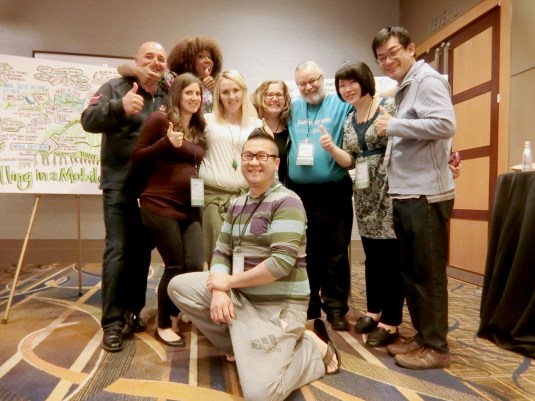
I’ve come to know and truly appreciate the dedication and hard work of these psoriatic online advocates. I’m glad we spent a few days together in April in Chicago for meetings. From left to right: Todd, Sabrina, Alisha, Summer, Lori Ann, Jim, Ya Hsin, Me, and Huy (kneeling).

HealtheVoices is an incredible conference for online health advocates. I’ve been blessed to participate in the conference for all three years, serving on the advisory panel last year. This year I went wondering what I might learn this time around.

The conference is like drinking from the proverbial fire hydrant. I came away from the Facebook seminar thinking I needed to put much more effort into my Itch to Beat Psoriasis FB page. Other sessions I came away feeling like I needed to write a book, read more articles, or get more involved in legislative advocacy.

Then I went to the YouTube session amazed at how video is taking the world by storm. I generally don’t like to make videos, but I’ve done a few and am open to make more for psoriasis advocacy. I immediately messaged my family asking if I should start a YouTube channel, and if they would help me.

They ignored the request at first. Then a couple of them nicely, but firmly said no. Not that they didn’t want to help me, but that I already have enough on my plate to keep up with. They didn’t think I needed to add something new at this time. I needed to hear that.

As I flew back from Chicago to Sacramento these two themes resonated with me: appreciate what I have, and be open to change.

Appreciate What I Have

Since the first HealtheVoices conference in 2015, I began to get involved in psoriasis blogger groups and advocacy opportunities. Prior to that time I didn’t check emails to join pharmaceutical meetings, or meet-ups with other psoriasis advocates. Once I started saying yes to invitations, I became part of a vibrant community of online advocates.

Seeing other advocates, especially those in the psoriasis community, became a major motivation for me to go to HealtheVoices. Janssen began sponsoring the I Know Pso group late last year. The day before HealtheVoices would be our second face-to-face meeting. Since I attended the American Academy of Dermatology meeting in Orlando, I spent some time leading a session on my observations in the I Know Pso meeting.

FullSizeRender.jpg-1

The I Know Pso psoriasis blogger team met at the Swissotel in Chicago on April 20th, the day before HealtheVoices17 started. I led a session sharing my observations from the American Academy of Dermatology conference in Orlando in March.

I’m grateful for the I Know Pso group, as well as other groups that gather and advocate together for psoriasis related causes. I want to do well in keeping up relationships there and building into those teams and groups.

I also enjoy writing best. While I have a Facebook page, Twitter handle, and even a mostly dormant Instagram account, I prefer blogging. Writing for different sites and organizations gives me the opportunity to practice my art creatively based on the mission and individual needs of each one.

Besides advocacy, I have a wonderful family with three children who still need their dad day-to-day, and a church that depends on their pastor from week-to-week. I have a full life that I came to truly appreciate at HealtheVoices.

While I would love to do more of this or that, I left the conference content with what I do have.

Be Open to Change

At the same time I realized that I need to change. The Everyday Health VP Editorial Director, Amy O’Connor, led a workshop on “Mobile-Gedden.” The story board contains the original title, “Storytelling in a Mobile World.” The takeaway for me is that people look at content on mobile devices more than ever before. That means optimizing content for those who are on the go.

FullSizeRender.jpg-2

Amy O’Connor, the editor ultimately overseeing my Everyday Health blog, led the Storytelling in a Mobile World session, which she renamed “Mobile-Gedden.” The story board is a great example of the art work created real time during each session.

That session opened my eyes to the changing world. In the old days (well 10 years ago anyhow) I marveled at how I could get into someone’s living room through their computer screen. Those with a stigmatized and visible condition like psoriasis, I figured, might not go to a support group or go out of their way to meet with others with psoriasis. But they might read a blog and connect to a person like myself sharing my experiences living with psoriasis.

The paradigm shift is to think about going with people to the doctor’s office, shopping, or the gas station. I resisted that change, still thinking about the living room. But the session, and the conference as a whole, challenged me to be open to going where people are.

This idea of adapting to change is a theme for my life. As a middle ager (I can’t believe I’m almost 46!) I’ve begun the march back toward nostalgia. It’s not that I don’t see changes or what’s coming, it’s that I don’t like it. But I’ve dedicated my life in the service of others. Why would I not be willing to go where they are?

I’ve had some distance from the conference held April 21-23. Life didn’t slow down much for me, but I did stop long enough to appreciate all the great people and opportunities in my life. I challenge myself to adapt and change each day.

I came away from the conference less with new found ideas and initiatives, and more gratitude and rededication to serve others the best I know how.

Thanks to Janssen for sponsoring HealtheVoices 2017, including covering my travel and conference expenses. All thoughts expressed here are of course mine.

Standard