Living with Psoriasis, psoriasis, Psoriasis Treatments

An Almost Disastrous First Dermatology Visit

IMG_8511

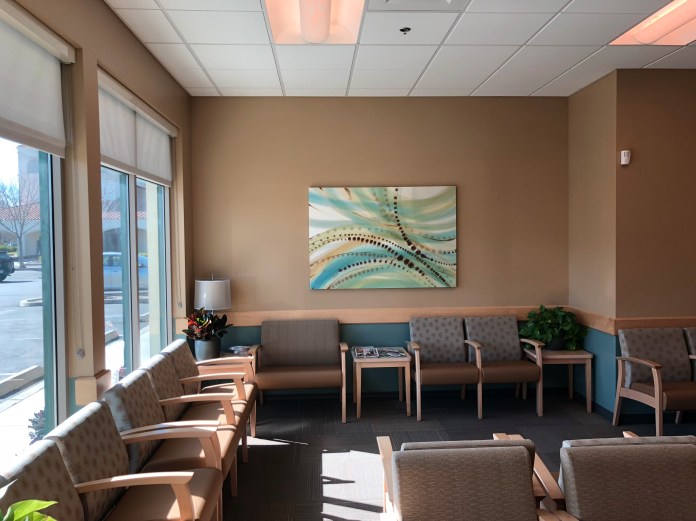
The empty lobby at the dermatology clinic at lunch time left me feeling quite anxious after I missed my 11:30 a.m. appointment, which I thought was at 1:30 p.m.

Wednesday morning started out quietly enough. I took the morning to rest as I had to work on my Monday day off. I looked forward to my first dermatology appointment at 1:30 p.m. I drove into town around 12:30 to give myself plenty of time. Then it dawned on me.

My dermatology appointment was at 11:30 a.m., not 1:30 p.m.

After double checking my calendar I decided to drive straight to the clinic. Even though the door was unlocked, I only found an “out to lunch” sign on the counter. A call to the scheduling center confirmed I missed my appointment. I’d waited over two months for this visit. Now I found myself one hour late to it.

The scheduler on the phone told me I could take the next available appointment with the dermatologist on May 8th, or with her colleague on May 2nd. She also gave me the option to stay in the clinic office until the staff returned from lunch. I opted for the latter.

As I waited all I could think about is what a disaster the first visit is turning out to be. Being late meant possibly not seeing the new dermatologist for weeks. One little mistake could mushroom into huge consequences for all my treatments.

As I waited all I could think about is what a disaster the first visit is turning out to be. Being late meant possibly not seeing the new dermatologist for weeks.

Awkward Beginnings

Finally, someone returned to the office. I sheepishly asked if she had started working yet, and shared how I felt embarrassed about missing my 11:30 appointment. The receptionist said it was okay, and took my information down. She then asked me to wait until the medical staff returned.

Dr. C’s medical assistant returned and started looking into my situation. He said they could work me into her schedule, but I needed to wait there for up to two hours. Ironically, I ended up getting a 1:45 p.m. appointment, only 15 minutes later than what I first thought. Around 2:00 p.m. the medical assistant called me into the exam room.

I felt anxious changing to a new medical group and system. Right off I felt awkward when I tried to sit on the exam table and asked for a gown.

“On the first visit the doctor likes you to keep your clothes on and sit in the chair,” the assistant informed me. I thought it sounded like rules for a first date, but went with it.

I felt anxious changing to a new medical group and system. Right off I felt awkward when I tried to sit on the exam table and asked for a gown.

Next, he told me the doctor is using an exam recording device that transmits to the Dominican Republic. It apparently helps with documentation so the doctor doesn’t need to worry about writing notes later. I didn’t want to make a fuss on my first visit and told him it would be fine.

Dr. C. walked in a few minutes later. She told me right away that she didn’t have that much time for the visit since I was being squeezed into her schedule.

Having no time to waste, I quickly dove into all my dermatology concerns assuming she could keep up. Continue reading

Standard
Family

How My Wife and I Support Each Other Through Chronic Illness

Howard Chang and his wife Lori found that being open about their chronic conditions brought them closer together.

Lori and I took this picture at the spot we got engaged in 1993 near Ghiradelli Square in San Francisco. It’s one of my favorite recent pictures of us together.

Happy Valentine’s Day to my dear wife, Lori! I can’t believe we met about 25 years ago at U.C. Davis as undergraduates. We bonded very quickly over the experiences of living with lifelong health condtions. Those health conditions persist to this day, with a few added to the picture as we become middle-aged. I would even say that psoriasis helped me find my wife

I wrote the following article for The Itch to Beat Psoriasis on Everyday Health a couple years ago on ways to support a loved one with chronic illness. I’m adding it here below as a reminder on Valentine’s Day of how far we have come through each other’s support and care.

 —————–

3 Ways to Support a Loved One With Chronic Illness

Finding the perfect gift for my wife, Lori, is always tricky. That’s because it’s not easy to express how much she means to me. She’s stood by as my main support through everything for more than 20 years, including living with a guy who has severe psoriasis.

As a minister, I officiate weddings and work closely with couples preparing for marriage. I always tell them that the center of the ceremony is the vows. The vow to love “in sickness and in health until death do us part” strikes me as especially solemn.

Many young couples sitting across from me do not truly comprehend the impact “in sickness” can have on their future lives. I know that Lori and I didn’t when we married in our early- and mid-twenties.

We hit it off immediately when we met as college students at the University of California, Davis. The two of us could speak for hours about anything and everything. We could especially relate on so many levels when talking about living with serious health conditions.

Lori was born with spina bifida, a neural tube defect that leaves the spinal cord and nerves open to damage. Doctors call hers a one-in-a-million case thanks to successful neurosurgery a few hours after birth. The condition did leave her with incontinence and neuromuscular weakness, but it could’ve left her incapacitated in a wheelchair.

The two of us could speak for hours about anything and everything. We could especially relate on so many levels when talking about living with serious health conditions.

Every year, I accompanied Lori to an all-morning spina bifida clinic. She stayed in an exam room while medical providers from nine different specialities, including neurology, urology, and nursing, checked her. After lunch, they discussed the patient’s condition and gave recommendations for follow-up.

During one visit, her worsening incontinence took center stage. The doctors and nurses couldn’t find a solution, suggesting possible surgery. I felt helpless as I witnessed her daily struggle trying to work and be a mom while emotionally frustrated by her condition. It took years to figure out how to best manage the incontinence, though no surgery was necessary.

My psoriasis also posed its challenges for Lori. She didn’t really understand or have much knowledge about the condition when we met, or during the early years of our marriage.

Lori admits she thought it was just a manageable itchy rash … nothing much to worry about. It would flare up at times, but there was oral medication, topical treatments, and dermatology appointments to get through it. Besides, Lori’s mom was facing terminal cancer, and the ensuing family drama after her death definitely took priority.

On the journey, Lori and I learned how to better support each other while managing our own anxieties, fears, and frustrations. Drawing from our experience, we brainstormed a few tips for people in support roles as they care for the most important people in their lives. Continue reading

Standard
psoriasis, Psoriasis Treatments

24 Weeks with Tremfya: A Pattern Emerges

Twenty-four weeks ago on Monday, August 21, 2017, I took my first injection of Tremfya (guselkumab) to treat my severe psoriasis. That day I witnessed a solar eclipse as I drove to the dermatology clinic in Sacramento. I recalled the day in grade school (February 26, 1979) when the last total solar eclipse occurred in the Northern Hemisphere. That’s around the time when the first psoriasis lesions emerged on my skin.

Over the course of those almost four decades between total solar eclipses I’ve battled severe psoriasis. Sadly, few treatments helped to effectively relieve the inflammation over those years.

I survived messy and smelly coal tar formulations, phototherapy burns, painful side effects of soriatane/etretinate, liver biopsies with methotrexate, rising blood pressure with cyclosporine, and five biologic mediations with injections. Not to mention the strange diets, supplements (I need write about the snake skin powder), alternative Chinese medications, and other unmentionables I tried to “cure” my psoriasis.

Over the course of those almost four decades between total solar eclipses I’ve battled severe psoriasis. Sadly, few treatments helped relieve the inflammation over those years.

Would Tremfya finally be the treatment to eclipse the nagging psoriasis all over my skin?

High Hopes and Expectations for Tremfya

Going into the clinic for my first injection I felt both excited and nervous. All those hopes and dreams of wanting to find “the one” treatment rested in that syringe full of medical innovation. That’s a lot of pressure and expectation on one treatment.

I knew before long that Tremfya would not be the cure I desired, even though it never promised to be one. By week 6 I began to redefine my expectations:

So, I’m lowering my expectations for Tremfya. I do hope this awesome new medication can beat the lowered expectations.  But if it can’t quite climb to the top of that mountain, I’ll take something less. I’ll take less than clear skin. I’ll accept if it needs something other than cyclosporine, such as phototherapy, or stronger topical treatments, to work more effectively at suppressing psoriasis.

Of course, I still hope it clears my skin in a couple months. But if it doesn’t by week seven or eight, I won’t fret about it not doing its job . . . at least not quite yet.

Going into week 21 I’m not fretting about whether or not Tremfya will work or not. Instead, I’m observing a pattern emerge on how it works with my psoriasis. Continue reading

Standard