Advocacy, psoriasis

Finishing Up at the American Academy of Dermatology 2017 Meeting

After taking a day to familiarize myself with the AAD meeting, I went full force for the next day and a half. I’m not sure how often patient advocates join meetings like AAD, but it definitely was a first for me. Without my guides and support from Janssen I don’t think I would have had such a positive experience.

Here are some of the elements of the meeting I experienced:

Exhibit Hall

fullsizerender-jpg-10

AAD 2017 Exhibit Hall in Orlando with over 400 booths

I took the picture above at the Aveeno booth, which shows me lost in an oat field. I don’t endorse products, but don’t mind sharing that I’ve personally used Aveeno since I was a teenager. I couldn’t pass up the photo opportunity!

The exhibit hall had over 400 booths with companies and organizations showing off their latest products, medications, and services. I naturally gravitated toward the consumer products and medications I use. But I also marveled at all the new medications available for psoriasis and atopic dermatitis. So much is coming down the pipeline, stay tuned.

Scientific Posters and Presentations

fullsizerender-jpg-8

Scientific Posters read on computers and presented in five minute sessionsfullsizerender-jpg-9

In another section of the exhibit hall doctors/researchers presented their scientific posters. I suppose these once were literal posters on a board, but now they are on slides available on computer monitors. I attended about six or seven of these sessions and found out some critical information for my future treatment options.

I liked how these sessions focused on a particular question, had clear conclusions, and did not go on for too long. The psoriasis sessions this morning garnered quite a bit of interest, as did all the psoriasis sessions I attended. Much of it flew over my head, but as a patient I still wanted to know the latest and greatest. It’s patients who can translate the information to other patients–even if we need them translated for us first.

Plenary Session

fullsizerender-jpg-7

The plenary session with Dr. Joel M. Gelfand presenting research on psoriasis and cardiovascular disease

I earmarked the the plenary session as one talk focused on the comorbidities associated with psoriasis. But first I heard the incoming AAD President’s address and another talk on melanoma. The anticipation grew as the psoriasis talk came.

Dr. Gelfand’s work includes research on the role of psoriasis in conditions found in patients. As many patients know, a myriad of conditions, such as diabetes and cardiovascular disease, are associated with psoriasis. We’ve known that those with moderate to severe psoriasis’s life spans shorten some five years. But does psoriasis cause those conditions?

The takeaway for the dermatologist is to check for psoriatic arthritis, educate and screen patients for cardiovascular risks, check for cancer, and give vaccinations like the flu shot. As patients we too should be asking for the same even if the doctor doesn’t order them for us.

Scientific Sessions

Finally, I sat in over four hours of lectures from top dermatologists on various topics related to psoriasis. The symposia had a number of doctors presenting for about 15-20 minutes each. The forum had two speakers who each took half the time.

I don’t have a picture of the scientific sessions as the AAD did not permit photography. Once I saw others take pictures, though, I felt tempted to take some. Even if I did, I wouldn’t show them publicly here. That’s if I did . . .


I have many more thoughts about the AAD meeting to sort out and blog about. Look for those in entries to come. In the meant time I’m looking forward to getting home tonight to celebrate my daughter’s 16th birthday.

Finally, I’m extremely grateful that Janssen gave me the opportunity to attend the meeting, and for their awesome support. They started a new psoriasis blogger group called “I Know PsO,” and invited me as a member of that group.

Standard
Advocacy, psoriasis

American Academy of Dermatology Annual Meeting Day 1

The first day for me at the American Academy of Dermatology Annual Meeting started with ample amounts of both excitement and trepidation. I’d never attended a medical meeting for physicians, nor did I represent companies that offered services or products for them.

Yet, I felt strangely like I did belong as a lifelong psoriasis and atopic dermatitis patient. In a way, the meeting existing for me, the dermatology patient. But I didn’t know where exactly I fit in to this meeting.

The morning agenda included a discussion between the National Psoriasis Foundation (NPF) and representatives from the pharmaceutical company Janssen (see note below). I shared my experience working with blogger groups, and listened as important topics related to outreach and treatment for those living with psoriasis and their caregivers.

In the afternoon I had a chance to go to the Orlando Convention Center to see the Exhibit Hall. I recognized many brands and medications I’ve used over the years. By the end of the day, however, many samples ran out at the booths. I plan to go back tomorrow during breaks between attending scientific sessions related to psoriasis.

The evening I enjoyed attending the NPF reception where they handed out medical professional awards. I met staff from the NPF, even having a short, but in-depth conversation about my volunteer work in Northern California/Sacramento.

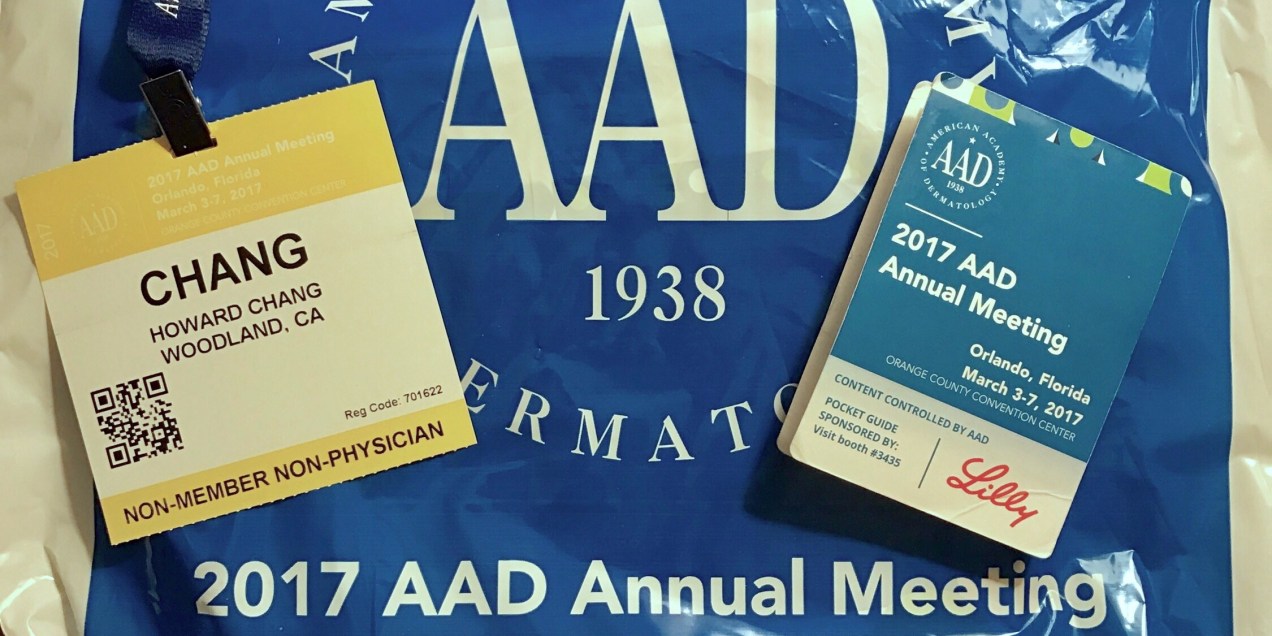
By the end of the day, my concern if I belonged or not at the AAD meeting did not feel so pressing. Curiosity and desire to learn more about my condition, and pass that knowledge to the psoriasis community took its place. Besides, I have a cool yellow access pass and map to guide the way!

[Note: Janssen paid for my time and travel expenses to attend the National Psoriasis Meeting meeting at AAD. All thoughts and opinions expressed here are my own and have not been influenced by Janssen.]

Standard
Advocacy, psoriasis

Heading Out to AAD 2017 in Orlando

Today is a travel day to the American Academy of Dermatology Annual Meeting in Orlando. I originally planned to go with a press credential (which the #AAD17 amazingly approved), but alas that didn’t work out. I’m participating as a psoriasis patient advocate–an opportunity I’m grateful to have.

I plan to blog and share on social media throughout the weekend, so feel free to follow along!

fullsizerender-jpg-1

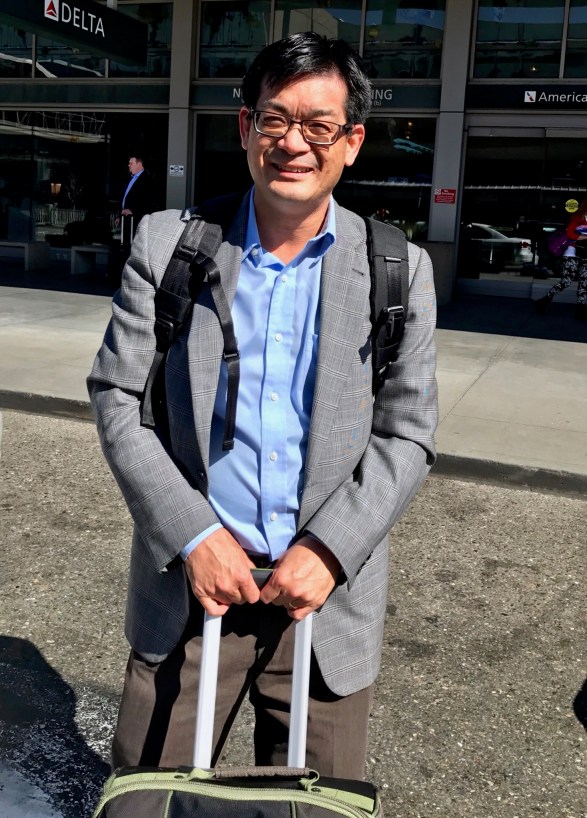
At the Sacramento Airport ready for a fully day of travel to Orlando and #AAD17

Standard
psoriasis

How to Take Charge of Your Psoriasis Treatment

[This blog was originally published on The Itch to Beat Psoriasis.]

I recently spoke with Dave Taylor, director of research at Inspire, a patient engagement company with about 220 disease condition sites. If a picture is worth a thousand words, then Inspire’s communities paint thousands of pictures of people living with a myriad of health conditions, including psoriasis.

The TalkPsoriasis community, in partnership with the National Psoriasis Foundation (NPF), now has over 100,000 members, and is the largest that Inspire hosts.

“These are people who took that first step and turned to the Internet,” Taylor says. “We have a billion words” from members who engage others about their health conditions on the site.

Patient Insights

Last year, I wrote about Inspire’s first annual survey titled “Insights from Engaged Patients.” I excitedly opened this year’s survey to find out what, if anything, changed.

Originally, I wrote about how to become a more engaged patient: advocate for yourself, break down barriers to care, and use electronic resources.

These three still stand out for me after reading the latest report. As an engaged patient, you need to advocate for yourself and break down barriers more than ever before. For example, engaged patients experienced cost issues 65 percent of the time with treatments, 52 percent with other medications related to treatment, and 40 percent from out-of-pocket costs related to travel and logistics.

Cost barriers continue to hit me in the wallet each time a family member picks up medication at the pharmacy or sees the doctor. The co-pays go up each year, while the benefits stay the same or decrease. It’s challenging to stay on top of your own healthcare — to overcome the countless hurdles like costs, insurance, and access. But that’s what engaged patients who live with serious health conditions need to do more than ever.

As for using electronic resources, this year’s survey showed that patients increasingly engage with their healthcare on mobile devices. As Taylor notes, “the number of people who used their smartphone to look for information about their health conditions went from 28 percent to 50 percent this year.”

While I am never far from my smartphone, I don’t use it as much for healthcare as I do for email and messages, checking the weather, or sports scores. In my experience, mobile delivery of health information has come a long way, but still needs improvement.

Taking Medications as Directed

As an autoimmune patient, I scanned the report to see if any data stood out for my group. I learned that “autoimmune and neurologic patients are more likely to have gone without medications (60 percent of patients of each type).” As Taylor says, “You are dealing with chronic, ongoing treatment. The fact that you have to take a medication indefinitely opens the door to adherence and compliance issues.”

Taylor also notes that people with more acute conditions might prioritize those over chronic conditions. I couldn’t agree more. Keeping up with medications is a concern that I’m focused on this year. The report cites side effects (53 percent), cost (53 percent), insurance coverage issues (40 percent), lack of effectiveness (33 percent), and dosing issues (8 percent) as reasons that patients stop taking prescription medications.

These issues are difficult to overcome and need to be addressed in proactive ways. Of course, talking to your doctor about adjusting medication is key. But I get embarrassed to tell him if I’m not following his directions, and I might not want to try the alternative.

Brand Name or Generic Equivalent?

A final observation from the report speaks to brand name and generic equivalent medications: “Oncology patients and autoimmune patients are more likely to not know if their medication has been switched to generic equivalent.”

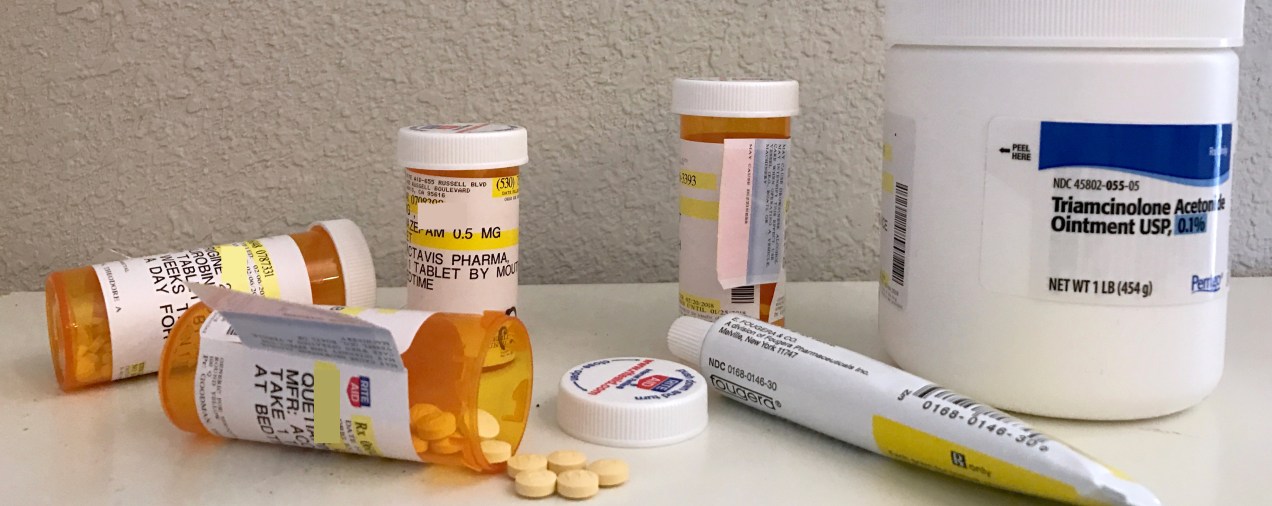
Often taking a generic equivalent is not an issue. But studies show that the brand name sometimes does make a difference. That’s the case with one of my medications. My dermatologist often forgets to note “brand name only” on the prescription. I refuse the generic, and have the pharmacy call my doctor to approve the brand name.

Do you know if your medications need to be brand name, or if they are switched to generic when you go to the pharmacy? The engaged patient needs to ask that question, at the doctor’s office  and the pharmacy.

The report contains much more information about the engaged patient than I could highlight here. You can view all the survey results here.

Standard